Marian Miner Cook
Athenaeum

A distinctive
feature of social and
cultural life at CMC


Current Semester Schedule

Athenaeum events are posted here as detailed information becomes available.

Mon, September 14, 2020
Dinner Program
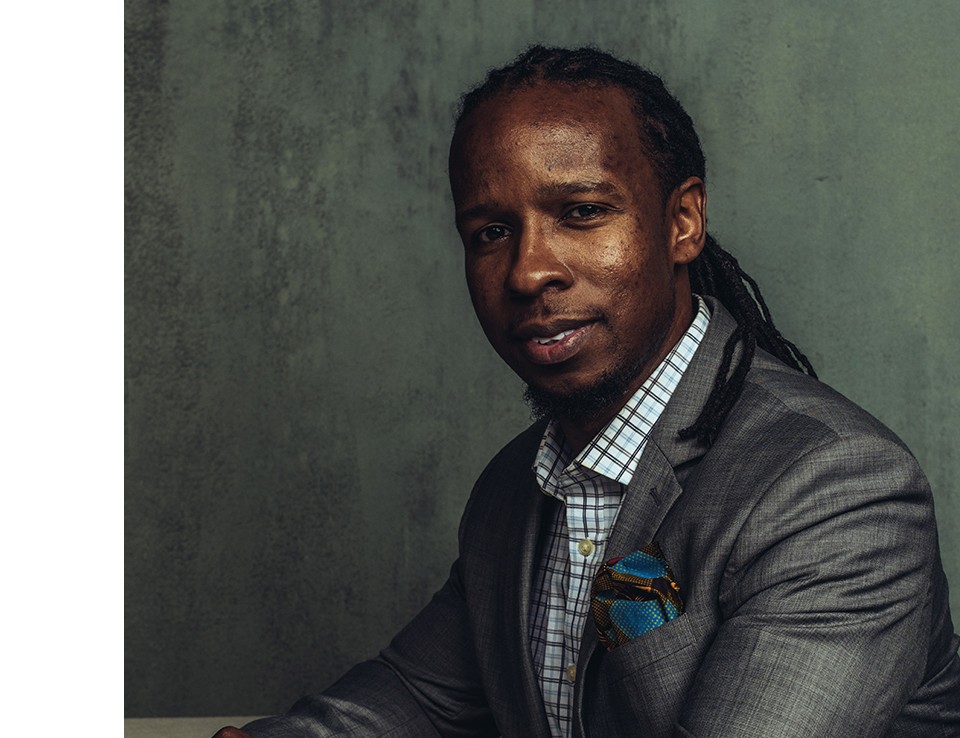
Ibram X. Kendi

"Like fighting an addiction, being an anti-racist requires persistent self-awareness, constant self-criticism, and regular self-examination,” affirms Ibram X. Kendi, author of the award-winning book How to Be An Antiracist. In conversation with the Athenaeum Fellows, Kendi will lay out his thoughts and ideas on the elements of an antiracist society—how to build it, how to engage with it, and how to live it.

Photo credit: Stephen Voss

Read more about the speaker

Ibram X. Kendi is one of America’s foremost historians and leading antiracist voices. An award winning author, Kendi is the Andrew W. Mellon Professor in the Humanities and the founding director of the Boston University Center for Antiracist Research. He is a contributor writer at The Atlantic and a CBS News correspondent. In 2020-2021, he is the Frances B. Cashin Fellow at the Radcliffe Institute for the Advanced Study at Harvard University.

Kendi’s book The Black Campus Movement, won the W.E.B. Du Bois Book Prize, and Stamped From The Beginning: The Definitive History of Racist Ideas in America, won the National Book Award for Nonfiction in 2016. At 34 years old, Kendi was the youngest ever winner of the National Book Award for Nonfiction.

Kendi is also the author of three #1 New York Times bestsellers, How to be An Antiracist, an international bestseller that has been translated in several languages; Stamped: Racism, Antiracism, and You, co-authored with Jason Reynolds; and Antiracist Baby, a picture book for children and care-givers, illustrated by Ashley Lukashevsky. How to be An Antiracist made several best books of 2019 lists and was described by the New York Times as “the most courageous book to date on the problem of race in the Western mind.”

Kendi has published fourteen academic essays in books and academic journals, including The Journal of African American History, Journal of Social History, Journal of Black Studies, Journal of African American Studies, and The Sixties: A Journal of History, Politics and Culture. He has published op-eds in numerous periodicals, including The New York Times, The Guardian, Washington Post, London Review, Time, Salon, Diverse: Issues in Higher Education, Paris Review, Black Perspectives, and The Chronicle of Higher Education. He comments on multiple international, national, and local media outlets, such as CNN, MSNBC, NPR, Al Jazeerah, PBS, BBC, Democracy Now, OWN, and Sirius XM. A sought-after public speaker, Kendi has delivered hundreds of addresses over the years at colleges and universities, bookstores, festivals, conferences, libraries, churches, and other institutions in the United States and abroad.

Recipient of many national awards and international accolades, Kendi has taught at universities around the country. Kendi majored in journalism and African American Studies at Florida A & M University; he earned his Ph.D. in African American Studies from Temple University.  

Professor Kendi’s Athenaeum presentation is co-sponsored by the President’s Leadership Fund.

Photo credit: Stephen Voss

Text adapted from https://www.ibramxkendi.com/about
Read less
Wed, September 9, 2020
Dinner Program
David Eagleman

Our brain spends years building a model of the outside world—and that’s what allows it to operate so effectively. But what happens when our model breaks down—like when we unable to make good predictions about what tomorrow will bring. Acclaimed neuroscientist David Eagleman answers the questions we are all wondering during self-isolation. Why we are having such a hard time thinking into the distant future? Why is it so difficult to keep track of how much time has actually passed? Eagleman even reveals the surprising ways the pandemic is actually good for our brain plasticity, as well as some practical tips for how to manage these uncertain times from a neuroscience point of view.

Photo credit: Stephanie Berger

Read more about the speaker

David Eagleman is a neuroscientist and a bestselling author. He heads the Center for Science and Law, a national non-profit institute, and serves as an adjunct professor at Stanford University. He is best known for his work on sensory substitution, time perception, brain plasticity, synesthesia, and neurolaw.

Scientific advisor on HBO’s Westworld, host of the documentary The Creative Brain, now streaming on Netflix, and host of PBS’ Emmy-nominated series The Brain, Eagleman has published over 100 academic publications and many popular books. His bestselling book Incognito: The Secret Lives of the Brain, explores the neuroscience "under the hood" of the conscious mind: all the aspects of neural function to which we have no awareness or access. His work of fiction, SUM, is an international bestseller published in 28 languages and turned into two operas.

Among many accolades, Eagleman is a TED speaker, a Guggenheim Fellow, a winner of the McGovern Award for Excellence in Biomedical Communication, a Next Generation Texas Fellow, vice-chair on the World Economic Forum's Global Agenda Council on Neuroscience & Behavior, a research fellow in the Institute for Ethics and Emerging Technologies, chief scientific advisor for the Mind Science Foundation, and a board member of The Long Now Foundation. He has served as an academic editor for several scientific journals and was named science educator of the year by the Society for Neuroscience. 

View Video: YouTube with David Eagleman

Photo credit: Stephanie Berger

Read less
Thu, April 30, 2020
Dinner Program
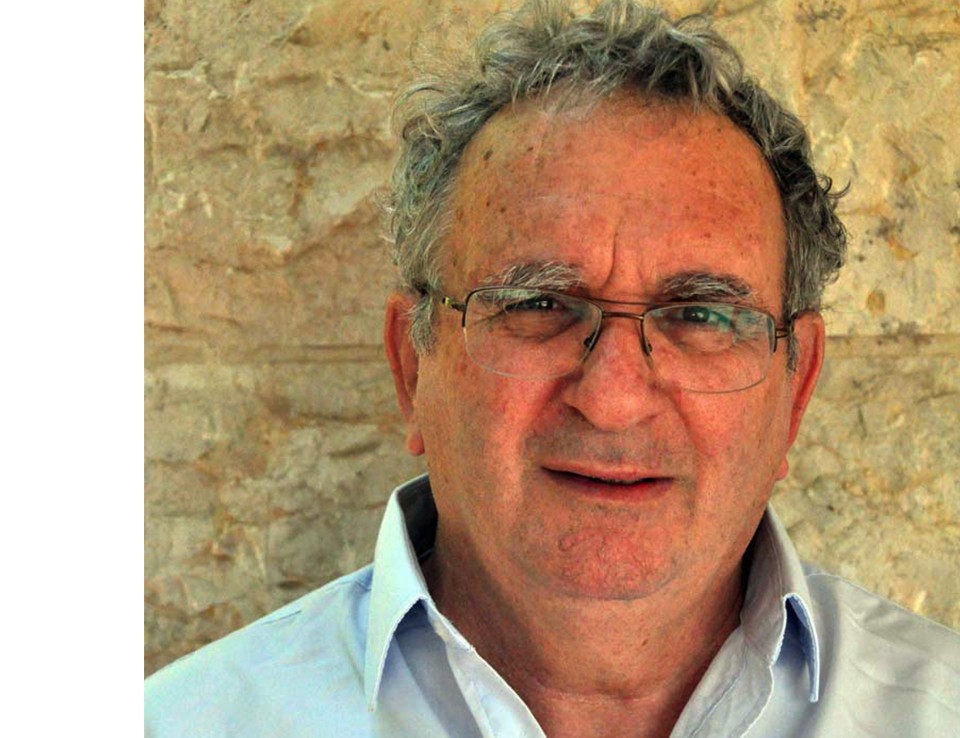
Benny Morris (EVENT POSTPONED UNTIL FURTHER NOTICE)

Between 1894 and 1924, three waves of violence swept across Anatolia, targeting the region’s Christian minorities, who had previously accounted for 20 percent of the population. By 1924, the Armenians, Assyrians, and Greeks had been reduced to 2 percent. Most historians have treated these waves as distinct, isolated events, and successive Turkish governments presented them as an unfortunate sequence of accidents. Benny Morris’s "The Thirty-Year Genocide" is the first account to show that the three were actually part of a single, continuing, and intentional effort to wipe out Anatolia’s Christian population.

Read more about the speaker

Benny Morris is one of Israel’s leading historians and public intellectuals. He was born in Israel in 1948 and was educated at the Hebrew University (BA) and Cambridge University (Ph.D.). He served in the IDF in infantry and paratroops. He was a journalist at The Jerusalem Post from 1978 to 1990 and was professor of Middle East history at Ben-Gurion University from 1997 to 2017. From 2015 to 2018, he was visiting Israel studies professor at Georgetown University. He has also taught as a visiting professor at Harvard University, Munich University, the University of Maryland and Dartmouth College, and was a visiting fellow at the Brookings Institution.

Morris has published ten books on Middle East and European history, with a focus on the Arab-Zionist conflict. His books include “The Birth of the Palestinian Refugee Problem” (Cambridge University Press); “1948, A History of the First Arab-Israeli War” (Yale University Press); and “Righteous Victims, A History of the Arab-Zionist Conflict, 1882-1999” (Knopf).   His most recent book, co-authored with Prof. Dror Ze’evi, is “The Thirty-Year Genocide, Turkey’s Destruction of its Christian Minorities, 1894-1924” (Harvard University Press), published in April 2019.  He is currently working on a biography of the (Jewish) master spy, Sidney Reilly.  In addition to his books, he has also published articles in The New York Times, The Wall Street Journal, The New York Review of Books, The New Republic, The Guardian, Corriere della Sera, Liberation, Die Welt, and Haaretz. 

Benny Morris’s Athenaeum talk is co-sponsored by the Mgrublian Center for Human Rights and the Department of Religious Studies and Jewish Studies Sequence at CMC.

(Source: Amazon.com book publicity)

Read less
Wed, April 29, 2020
Senior Students (EVENT POSTPONED UNTIL FURTHER NOTICE)

Our seniors have studied it all and more. Applying everything they have learned in class and in the field, seniors put their hearts and minds into their senior capstone project. Come hear about their research, motivation, and findings, as well as their overall thesis journey. Most importantly come support and celebrate CMC peers and students! 

Read more about the speaker

The senior thesis requirement at CMC is challenging and rewarding and seniors endeavor to produce innovative, thoughtful, comprehensive, and well written work. In this fourth annual Senior Thesis Showcase, a as-yet-not-identified group of eight to nine seniors, will present 5 to 7-minute synopses of their capstone project. Come hear about their research, motivation, and findings, as well as their overall thesis journey. Most importantly come support and celebrate your CMC peers! 

Read less
Tue, April 21, 2020
Dinner Program
Students from CMC Research Institutes (EVENT POSTPONED UNTIL FURTHER NOTICE)

The research institutes and centers at Claremont McKenna College share a common goal: To provide CMC students with graduate-level research opportunities in collaboration with the College's distinguished faculty. The Institute Night @ the Ath offers a look inside the college eleven institutes and their unique mission, academics and co-curricular objectives. It’s a night of inspired sharing and learning too, where students present research and talk about the ways engaging and working with institute faculty enriches the CMC learning experience.

Read more about the speaker

The research institutes and centers at Claremont McKenna College share a common goal: To provide CMC students with graduate-level research opportunities in collaboration with the College's distinguished faculty. The Institute Night @ the Ath offers a look inside the college eleven institutes and their unique mission, academics and co-curricular objectives. It’s a night of inspired sharing and learning too, where students present research and talk about the ways engaging and working with institute faculty enriches the CMC learning experience.

Read less
Mon, April 20, 2020
Dinner Program
Gary Evans (EVENT POSTPONED UNTIL FURTHER NOTICE)

One key element in motivating both attitude and behavioral change regarding global climate change (“GCC”) is increasing awareness of the physical and mental health impacts of GCC. Over the past decade there has been an explosion of scholarship on the likely physical health impacts of GCC, but little is known about the psychological health implications of phenomenon. Gary Evans, environmental and developmental psychologist at Cornell University, will lay out some preliminary ideas about how GCC might be expected to impact human behavior, paying particular attention to elevated temperatures, diminished air quality, and increased severity and volatility of natural disasters.

Read more about the speaker

Gary W. Evans is the Elizabeth Lee Vincent Professor of Human Ecology in the departments of design & environmental analysis and human development at Cornell University. An environmental and developmental psychologist, he is interested in how physical environment affects human health and well-being in particular among children. His specific areas of expertise include the environment of childhood poverty, children's environments, cumulative risk and child development, environmental stressors, and the development of children's environmental attitudes and behaviors. 

Evans is the author of over 300 scholarly articles and chapters plus five books. He was a core member of the MacArthur Foundation Network on Socioeconomic Status and Health, on the board of Children, Youth, and Families of the National Academy of Sciences, and on the board of Scientific Counselors, National Center for Environmental Health/Agency for Toxic Substances and Disease Registry, Center for Disease Control. Evans is a fellow of the John Simon Guggenheim Memorial Foundation and received a Docteur Honoris Causa from Stockholm University. Celebrated as an award-winning teacher, he has taught and lectured in over 50 countries.

Professor Evans's Athenaeum presentation is co-sponsored by the Berger Institute and the Roberts Environmental Center, both at CMC.

Read less
Thu, April 16, 2020
Lunch Program
Cassia Roth (EVENT POSTPONED UNTIL FURTHER NOTICE)

Cassia Roth examines women’s reproductive health in relation to legal and medical policy in Rio de Janeiro, Brazil. Analyzing court cases, law, medical writings, and health data, Roth argues that the increasingly interventionist state (post abolition of slavery in 1888 and the onset of republicanism in 1889) fostered a culture of condemnation around poor women’s reproductive practices. By tracing how legal thought and medical knowledge became cemented into law and clinical practice; how obstetricians, public health officials, and legal practitioners approached fertility control; and how women experienced and negotiated their reproductive lives, Roth provides a new way of interpreting the intertwined histories of gender, race, reproduction, and the state—and shows how these questions continue to reverberate in debates over reproductive justice and women’s health in Brazil today.

Read more about the speaker

Cassia Roth is assistant professor of history and Latin American & Caribbean Studies at the University of Georgia. Prior to that, she was a Marie Sklodowska-Curie Postdoctoral Research Fellow at the University of Edinburgh in Scotland and a Fulbright Postdoctoral Scholar at the Fundação Oswaldo Cruz in Rio de Janeiro, Brazil. Her book, A Miscarriage of Justice: Women’s Reproductive Lives and the Law in Early Twentieth-Century Brazil was just published with Stanford University Press. Her work has appeared in the Journal of Women’s History, Slavery & Abolition, and História, Ciência, Saúde – Manguinhos, and her article “From Free Womb to Criminalized Woman: Fertility Control in Brazilian Slavery and Freedom,” won the 2018 Berkshire Conference of Women Historians Best Article Prize. She has taught Latin American and gender history at the University of Georgia, UCLA, Occidental College in Los Angeles, and the University of Edinburgh. She is also a contributing writer and editor with the medical and gender history blog Nursing Clio. Her research has been supported by Fulbright, the National Science Foundation, the Woodrow Wilson Foundation, the American Historical Association, the Coordinating Council for Women in History, and the European Union.

Read less
Thu, April 9, 2020
Dinner Program
Valerie Hudson (EVENT POSTPONED UNTIL FURTHER NOTICE)

Does undermining the security of women undermine the security of the nation-states in which they live? Micro- and macro-analysis says yes, but ofttimes the causal mechanisms underlying that linkage are left vague. Valerie Hudson, professor of international relations and and director of Program on Women, Peace and Security at Texas A & M, will offer three case studies—abnormal and contrived sex ratios favoring males, brideprice, and polygyny—that show how the subordination and oppression of women produces instability for the nation-state and consequences for international relations.

Read more about the speaker

Valerie M. Hudson is professor and holds the George H.W. Bush Chair in the department of international affairs at The Bush School of Government and Public Service at Texas A&M University, where she directs the Program on Women, Peace, and Security. Her research includes foreign policy analysis, security studies, gender and international relations, and methodology. Hudson is one of the principal investigators of The WomanStats Project which includes the largest compilation of data on the status of women in the world today. Winner of numerous teaching awards and recipient of a National Science Foundation research grant and a Minerva Initiative grant, she was recently named a Distinguished Scholar of Foreign Policy Analysis by the International Studies Association. She is the author/co-author of “Sex and World Peace,” “The Hillary Doctrine,” Foreign Policy Analysis,” “Bare Branches,” and (forthcoming) “The First Political Order: Sex, Governance, and National Security.”

Professor Hudson is the 2020 Phi Beta Kappa Visiting Scholar and her Athenaeum presentation is co-sponsored by the Phi Beta Kappa Society and the Keck Center for International and Strategic Studies at CMC. Her lecture is also part of the Women in Security series at the Athenaeum this spring.

Read less
Wed, April 8, 2020
Dinner Program
Terrence L. Johnson (EVENT POSTPONED UNTIL FURTHER NOTICE)

When the House of Representatives began its impeachment inquiry into President Trump’s abuse of presidential power, political commentators decried the country was in a “genuine” constitutional crisis. The claim emerged, in part, from a problem of constitutional interpretation and competing views of presidential power, abuse, and congressional oversight. Following the subsequent hearings and acquittal, many are left questioning the efficacy of retrieving the Constitution to adjudicate future legal disagreements between Congress and a sitting president. By exploring African American biblical hermeneutics and uses of the Constitution in Black political struggles, Terrence Johnson, associate professor religion and politics at Georgetown University, frames the current "constitutional crisis" as a failure of political imagination and a reminder of bad faith among political elites.

Read more about the speaker

Terrence L. Johnson is an associate professor of religion and politics in the department of government and a senior research fellow at the Berkley Center for Religion, Peace and World Affairs. He is an affiliate member of the departments of African American Studies and theology and religious studies.

He is the author of “Tragic Soul-Life: W.E.B. Du Bois and the Moral Crisis Facing American Democracy” (Oxford 2012) and serves as co-editor of the Duke University Press Series Religious Cultures of African and African Diaspora. His essays have appeared in a number of edited volumes and journals, including the Journal of Religious Ethics, Journal of Africana Religions, Reading Religion and the Journal of the Society Christian Ethics.  

Johnson's second manuscript, “We Testify with Our Lives: Black Power and the Ethical Turn in Politics,” explores the decline of Afro-Christianity in the post-civil rights era and the increasing efforts among African American leftists to imagine ethics and human rights activism as necessary extensions of, and possibly challenges to, political liberalism, pragmatism and liberal public philosophies rooted in individualism, neutrality and exceptionalism.

A graduate of Morehouse College, Johnson received his M.Div. from Harvard Divinity School and Ph.D. in Religious Studies from Brown University.

(Adapted from www.georgetown.edu)

Read less
Tue, April 7, 2020
Dinner Program
Saidiya Hartman (EVENT POSTPONED UNTIL FURTHER NOTICE)

Saidiya Hartman, professor of English and comparative literature at Columbia University, is a scholar of African American literature and cultural history. Her works—which include "Scenes of Subjection: Terror, Slavery, and Self-Making in Nineteenth-Century America," "Lose Your Mother: A Journey Along the Atlantic Slave Route" and, most recently, "Wayward Lives, Beautiful Experiments: Intimate Histories of Social Upheaval"—explore the afterlife of slavery in modern American society.

Read more about the speaker

Saidiya Hartman, professor of English and comparative literature at Columbia University, is a scholar of African American literature and cultural history. Her works—which include "Scenes of Subjection: Terror, Slavery, and Self-Making in Nineteenth-Century America," "Lose Your Mother: A Journey Along the Atlantic Slave Route" and, most recently, "Wayward Lives, Beautiful Experiments: Intimate Histories of Social Upheaval"—explore the afterlife of slavery in modern American society.

According to the MacArthur citation, through her research and writing, Hartman bears "witness to lives, traumas and fleeting moments of beauty that historical archives have omitted or obscured," and "weaves findings from her meticulous historical research into narratives that retrieve from oblivion stories of nameless and sparsely documented historical actors, such as female captives on slave ships and the inhabitants of slums at the turn of the twentieth century."

Hartman received a BA (1984) from Wesleyan University and a PhD (1992) from Yale University. She was a professor in the department of English and African American Studies at the University of California, Berkeley (1992–2006), prior to joining the faculty of Columbia University, where she is currently a professor in the department of English and comparative literature. She is the former director of the Institute for Research on Gender and Sexuality at Columbia University and was a Whitney Oates Fellow at Princeton University (2002), a Cullman Fellow at the New York Public Library (2016–2017), and a Critical Inquiry Visiting Professor at the University of Chicago (2018). In addition to her books, she has published articles in journals such as South Atlantic Quarterly, Brick, Small Axe, Callaloo, The New Yorker and The Paris Review. 

Professor Hartman will deliver the Gould Center for Humanistic Studies' 2020 Quinones Lecture.

Photo credit: John D. & Catherine T. MacArthur Foundation

Read less
Mon, April 6, 2020
Dinner Program
Martin Baron (EVENT POSTPONED UNTIL FURTHER NOTICE)

Martin “Marty” Baron has been executive editor of The Washington Post since January 2, 2013. He oversees The Post’s print and digital news operations and a staff of more than 800 journalists. Previously he was editor of the The Boston Globe which won the Pulitzer Prize for Public Service in 2003 for its investigation into a pattern of concealing clergy sex abuse in the Catholic Church, coverage portrayed years later in the Academy Award-winning movie “Spotlight.”


Read more about the speaker

Martin “Marty” Baron became executive editor of The Washington Post on January 2, 2013. He oversees The Post’s print and digital news operations and a staff of more than 800 journalists.

Newsrooms under his leadership have won 17 Pulitzer Prizes, including ten at The Washington Post, six at The Boston Globe, and one The Miami Herald. The Post, during his tenure, has won four times for national reporting, and once each for investigative reporting, explanatory reporting and public service, the latter in recognition of revelations of secret surveillance by the National Security Agency.

Previously, Baron was editor of The Boston Globe. During his 11 ½ years there, The Globe won six Pulitzer prizes—for public service, explanatory journalism, national reporting and criticism. The Pulitzer Prize for Public Service was awarded to the Globe in 2003 for its investigation into a pattern of concealing clergy sex abuse in the Catholic Church, coverage portrayed years later in the Academy Award-winning movie “Spotlight.”

Prior to the Globe, he held top editing positions at The New York Times, the Los Angeles Times and the Miami Herald. Under his leadership, the Miami Herald won the Pulitzer Prize for Breaking News Coverage in 2001 for its coverage of the raid to recover Elián González, the Cuban boy at the center of a fierce immigration and custody dispute.

Others honors include Editor of the Year by the National Press Foundation (2004), the Al Neuharth Award for Excellence in the Media (2017), the Reporters Committee for Freedom of the Press Award (2017), and the Award for Public Leadership from the University of Pennsylvania’s Fels Institute of Government (2016). In 2012, he was inducted into the American Academy of Arts and Sciences. He is the recipient of honorary doctorates from George Washington University, George Mason University, and his alma mater, Lehigh University.

Baron graduated from Lehigh University in 1976 with both BA and MBA degrees.

Read less
Thu, April 2, 2020
Dinner Program
Jay Cordes (EVENT POSTPONED UNTIL FURTHER NOTICE)

When people talk about skills that are important for data science, the focus tends to be primarily on technical skills, like statistics and computer programming. Often overlooked is the importance of the scientific mindset. Being a critical thinker is essential to interpreting data and to avoiding the traps of analysis on auto-pilot, which can lead—and has led—to catastrophic failure. Jay Cordes, Pomona mathematics major turned data scientist and co-author of “The 9 Pitfalls of Data Science,” asserts that maintaining a skeptical mindset will keep you vigilant for the “silent evidence of failures” that distorts statistical significance. For data science to work, you need to think and work like a scientist.

Read more about the speaker

Jay Cordes is a data scientist who co-authored the book "The 9 Pitfalls of Data Science" with Pomona economist Gary Smith to help guide future data scientists away from the common pitfalls he saw in the corporate world. He earned a degree in mathematics from Pomona College and more recently received a Master of Information and Data Science (MIDS) degree from UC Berkeley. Cordes hopes to improve the public's ability to distinguish truth from nonsense.

Read less
Wed, April 1, 2020
Dinner Program
Gina M. Bennett (EVENT POSTPONED UNTIL FURTHER NOTICE)

Why is America’s national security defined as securing our borders and buildings? What about the security of our values as a nation, the resiliency of our democratic republic? America's understanding of national security is deeply rooted in a history that equates men's physical might with security. But girls do not experience the luxury of physical security. Gina Bennet, CIA counter-terrorism analyst and author of “National Security Mom,” argues that America needs to expand its definition of security, namely girl security, and extend security to intangibles such as integrity and independence.

Read more about the speaker

A senior counter-terrorism analyst, Gina Bennett authored some of the earliest warnings of today’s terrorism trends, including the 1993 report that warned of the growing danger of Osama Bin Laden and the extremist movement he was fomenting. Her analysis was subsequently called “prescient,” “genius,” and “prophetic” by major media and former government officials. Bennett has been an analyst at the C.I.A.'s Counterterrorism Center for 25 years and is the principal author of the 2006 National Intelligence Estimate "Trends in Global Terrorism: Implications for the U.S." She appeared in the 2015 The Spymasters documentary that detailed the inside workings of the C.I.A. She was also one of the six women in the CIA's "band of sisters" that tracked down bin Laden and inspired the 2012 thriller Zero Dark Thirty.

Bennett is a mother of five and author of the book, "National Security Mom." In the book, Bennett writes about the underworld of terrorism, showing that securing our nation is similar to how parents secure their homes and families.

Ms. Bennett’s Athenaeum presentation is part of the Women in Security series at the Athenaeum this spring.

Read less
Tue, March 31, 2020
Dinner Program
Kimberly West-Faulcon and Eugene Volokh, in conversation (EVENT POSTPONED UNTIL FURTHER NOTICE)

In a conversational format, Kimberly West-Faulcon and Eugene Volokh, professors of law at Loyola School of Law and UCLA School of Law respectively, will discuss some of the landmark cases in the Supreme Court docket this term with particular attention to likely outcomes and impact.

Read more about the speaker

Kimberly West-Faulcon is a professor of law and holds the James P. Bradley Chair in Constitutional Law at Loyola Law School where she teaches constitutional law and advanced topics in constitutional law. Her research and writings explore the constitutional and civil rights law implications of theories of human intelligence and the psychometric properties of standardized tests. Her academic articles and legal commentary appear regularly in highly regarded law journals and publications around the nation. West-Faulcon has also filed solo-authored amicus curiae briefs in the United States Supreme Court based on her scholarly expertise and insights. 

West-Faulcon’s scholarship and teaching are grounded in her early career as a constitutional law litigator and her experience as the Western Regional Director-Counsel of the NAACP Legal Defense and Educational Fund. Featured in the Los Angeles Simon Wiesenthal Museum of Tolerance “Freedom’s Sisters” Exhibit as a “Southern California Freedom’s Sister” in 2011, West-Faulcon’s significant legal accomplishments led to her selection as a “Rising Star Lawyer Under 40” by Los Angeles Magazine and her three-time selection as a “Southern California Super Lawyer”. 

A graduate of Yale Law School, West-Faulcon was a senior editor of the Yale Law Journal. After law school, she clerked for the Honorable Stephen R. Reinhardt on the Ninth Circuit U.S. Court of Appeals. She obtained her undergraduate degree Phi Beta Kappa from Duke University, where she graduated summa cum laude, receiving numerous academic honors including the Duke University Faculty Scholar Award and the University Rankin Award for Constitutional Law. 

Eugene Volokh is professor of law at UCLA Law School where he teaches First Amendment law and a First Amendment amicus brief clinic; he has also often taught criminal law, copyright law, tort law, and a seminar on firearms regulation policy. In addition to his academic work, he has also filed briefs in about 75 appellate cases throughout the country, has argued in over 20 federal and state appellate cases, and has filed briefs in the U.S. Supreme Court.

Volokh is the author of the textbooks The First Amendment and Related Statutes (6th ed. 2016) and Academic Legal Writing (5th ed. 2016), as well as over 75 widely published and frequently cited law review articles. He is a member of The American Law Institute; a member of the American Heritage Dictionary Usage Panel; the founder and co-author of The Volokh Conspiracy, a Weblog that was hosted by the Washington Post and is now at Reason Magazine; and an academic affiliate for the Mayer Brown LLP law firm.

A graduate of UCLA Law School, he clerked for Judge Alex Kozinski on the U.S. Court of Appeals for the Ninth Circuit and for Justice Sandra Day O'Connor on the U.S. Supreme Court. 

This Athenaeum event is co-sponsored with funding from the Open Academy at CMC.

Read less
Tue, March 31, 2020
Lunch Program
Albert L. Park (EVENT POSTPONED UNTIL FURTHER NOTICE)

Global political, economic, social, and environmental upheavals since the early 2000s have proven that the 21st Century will be full of volatility and uncertainty. People are seeking systems of knowledge and practice to make sense of changes and help guide them through the everyday happenings at the local, national, and global levels. Professor Albert Park, the Bank of America Associate Professor of Pacific Basin Studies at Claremont McKenna College, will speak to the pivotal role history can play in this milieu and how historians should approach the past by being “mad” in order to engage the fractured present. 

Read more about the speaker

Albert L. Park is the Bank of America Associate Professor of Pacific Basin Studies at Claremont McKenna College. As a historian of modern Korea and East Asia, his current research project focuses on the roots of environmentalism in modern Korean history and its relationship to locality and local autonomy. His book project is tentatively titled "Imagining Nature and the Creation of Environmental Movements in Modern Korea." He is the author of "Building a Heaven on Earth: Religion, Activism and Protest in Japanese Occupied Korea" and is the co-editor of "Encountering Modernity: Christianity and East Asia."

Park is the co-founder of EnviroLab Asia—a Henry Luce Foundation-funded initiative at the Claremont Colleges that researches environmental issues in Asia through a cross-disciplinary lens. He is the co-founder and co-editor of "Environments of East Asia"—a Cornell University Press, multidisciplinary book series that covers environmental issues and questions of East Asia. He also serves as an associate editor for the Journal of Asian Studies. 

Park is the recipient of four Fulbright Fellowships for Research, an Abe Fellowship (Social Science Research Council and Japan Foundation Center for Global Partnership), and fellowships from the Korea Foundation and the Center for East Asian Studies at the University of Chicago. 

A native of Chicago, he received his B.A. with honors from Northwestern University, an M.A. from Columbia University, and a Ph.D. in History from the University of Chicago.  

Professor Park's Athenaeum presentation celebrates his installation ceremony as the Bank of America Associate Professor of Pacific Basin Studies at Claremont McKenna College.


Read less

Marian Miner Cook Athenaeum

Claremont McKenna College
385 E. Eighth Street
Claremont, CA 91711

Contact

Phone: (909) 621-8244 
Fax: (909) 621-8579 
Email: