

In 1980, with mortgage rates rising, Craige Citron was a rookie real estate agent working for Forrest E. Olson in Poway, CA, located in the North County of San Diego. Told that he needed 500-1000 people to get to know him to be a successful real estate agent and thinking that making cold phone calls would not work, he chose the lesser of two evils: knocking on doors. He sat for two days, frozen, in his car. On day three he finally mustarded up the nerve to knock on the first of 836 doors in his service area, commonly called a “farm.” Understanding that people work with people they know and like, he was told, “it takes 6 contacts before someone remembers you.” Craige set about knocking on all 836 doors until he had met every homeowner at least six times!
He researched homeowners’ names and purchase dates, learning all he could about the homes and families in his farm. He planted seeds, watered, fertilized, and reaped the harvest - like any good farmer. Every month he tracked with whom he'd spoken, whether wife or husband, the quality of the contact, the names of children and pets. Initially, he dropped off a letter of introduction, then, for 15 years, he wrote and personally delivered a newsletter and notepad with his local market observations and updated sales information. He delivered Halloween pumpkins and Christmas mistletoe to every door. He started pumpkin carving and coloring contests for the kids. He sponsored free ice cream trucks and held turkey drawings. He worked until his efforts and expertise became obvious within the community. Eleven months in, he got his first listing, and his successful real estate career was born. Within the year, Craige was recruited by Century21 Northcutt. Its Broker was Alice Hooker. Craige loved her business card that read: A. Hooker, “Your Neighborhood Professional.” Craige continued working his business model and his farming reputation grew.
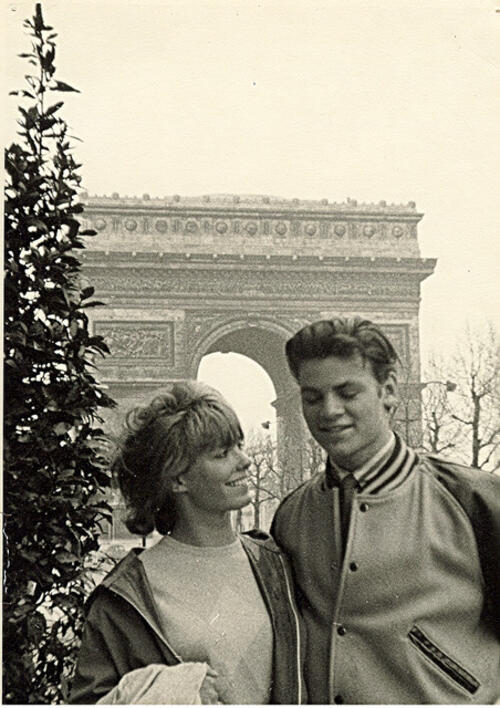
In 1963, having grown up in LA, Craige applied to Occidental, USC, and CMC. Wanting a small school, he chose CMC. His mother, however, wanted him to experience an academic year abroad, living with a French family and becoming fluent. CMC agreed to his delayed entry and exempted him from the language requirement. One of the young ladies in the program was Joan (Joni) Howell, from Greenwich, Connecticut, who, on sight, changed Craige’s life.
Following his year abroad, Craige chose Literature as his major. He joined Siddons and acted in several plays directed by Jesse Swan. He teamed with John Achorn ‘68 to create an improv group which gave pop-up performances at the Hub and worked numerous gigs, including at a local prison. While Craige sharpened his pool game at Story House and was part of the Green Hall bridge players, he was not as serious a student as his tuition should have made him. Craige comments, “love can do that to you!” During his Freshman year, he successfully applied himself to imploring Joni’s parents to send her to Pitzer. They agreed, but, it turned out, only for one year.
It was during Craige’s Sophomore year, spent with Joni across the street, that the draft and the Vietnam war suddenly became a reality. He decided to apply for the 2-year ROTC program that required attendance at a 6-week Summer Camp at Ft. Knox, KY. The experience was miserable. Hot and dusty, he found himself highly allergic to poison ivy that infected both ankles. Forced to wear low top shoes, rather than the combat boots required to be “in uniform,” he had to carry a doctor’s note to avoid harassment from the ROTC cadre. Every evening he stood in line at a pay phone with a pocket full of quarters, to call Joni and encourage her to return to Pitzer. One evening she told him she wasn’t coming back.
Devastated, Craige lost focus in his Junior year and school became a distraction. After missing several classes, as well as a spot test, Craige received his wake-up call from Dr. Ricardo Quinones just before the Christmas break. Given a second chance, he missed a second spot test! In danger of failing, he went to the next class trying to hide in the back of the room. Dr. Quinones spotted him immediately, asked his name, then called him out, saying, “It’s people like him who keep deserving students from getting a good education.” Rightfully embarrassed, Craige applied himself over the Christmas holiday and managed a C in the course.
Over Spring break, Craige heard Joni was planning to get married. In a last ditch effort to change her mind, after taking his last exam as a Junior, he jumped on a plane and arrived, unannounced, at her parents' home in Connecticut at 7:30 am. Her Mother answered the door and told him Joni was getting married in NYC that morning. With a promise to her parents not to do anything rash, and followed by her twin sister, Craige drove Joni to the NYC City Hall, dropped her off and drove back to JFK. He was back home in LA before the ink was dry on her marriage certificate. It was simple. He wasn’t ready to get married. She was. Craige’s Senior thesis, “It Happens Every Day,” was the story of his 24-hour attempt to change the script of his life. While his efforts failed, his thesis earned him his only A.
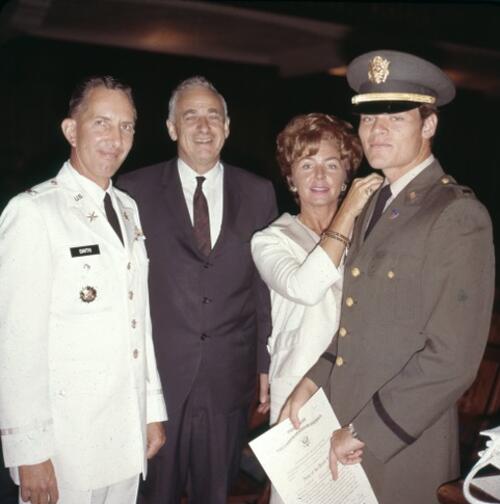
Craige learned he could have his choice of branches within the Army if he earned a DMG (Distinguished Military Graduate) designation. Looking to avoid a combat arms branch and assignment to Vietnam, Craige applied himself during his second ROTC Summer Camp at Ft. Lewis, Washington. He was arbitrarily given two leadership positions during the 6-week camp: squad leader and battalion commander. He was recognized for both performances by the platoon’s ROTC evaluator. As squad leader, he was in the first wave of the low crawl competition through mud and under barbed wire. Finding the zone, he was the first to complete the exercise. While Battalion Commander, he responded effectively to insubordination by his cadet Sergeant Major, again earning the respect of his evaluator. Craige finished Summer Camp as the top cadet from CMC and Pomona, graduated as a DMG, and chose Adjutant General Corps for his branch.
During the 6-months between graduation and attending the AG Basic Officer Course, Craige worked in his father’s plywood finishing plant. Having set Joni aside, he met a girl who appeared on “The Dating Game” and won a date trip to Kruger National Park, South Africa. Her choice of partners was a member of the Bee Gees, who was unable to take the trip, so she chose Craige to join her. Wow, a free trip to Africa– perhaps his luck was changing!
Ordered to report to Ft. Benjamin Harrison, Indiana on January 2, 1969, and coming from LA, Craige discovered cold weather — really cold. It was so cold that even Arctic gear could not salvage a field exercise. Upon completion of the 3-month course, he received orders to report to the AFEES (Armed Forces Examining and Entrance Station), in Oakland, California. The time corresponded to the height of Vietnam War protests in California and throughout the US. Craige became the Induction Officer, administering the Oath of Office to enlistees of all services, after which they were shipped off to various military posts throughout the US for Basic Training. One day a month, however, was ‘Draft Day,’ when men were selected by lottery to become soldiers.
There was never a dull draft day: men, who came in dressed as transvestites in dresses, stockings, and high heels were found rolling on the floor and slap fighting with a Marine Captain; another man flipped over a table with the days' worth of blood samples, which had to be re-drawn. He was nearly beaten up by the other draftees who had to have blood redrawn; most fun was the guy, found living in a cave, who showed up wearing only a bed sheet, with a goat on a rope. The man never said a word and when handed his draft papers, he fed them to the goat!
Administering the oath required draftees to raise their right hands. On draft days, two FBI agents were stationed at the back of the room. Any draftee who refused to take the oath after being given two opportunities, or who gave Craige the one-finger salute, would be whisked away by the FBI agents. While Craige came to respect the sincerity of those who opposed the war, he was aligned with those who chose to serve their country, as had his father, during WWII. In November 1969, Craige was ordered to the Colonel’s office and told he had received orders assigning him to Vietnam beginning December 14th. His first thought was, “I’m going to have to tell my mom!”
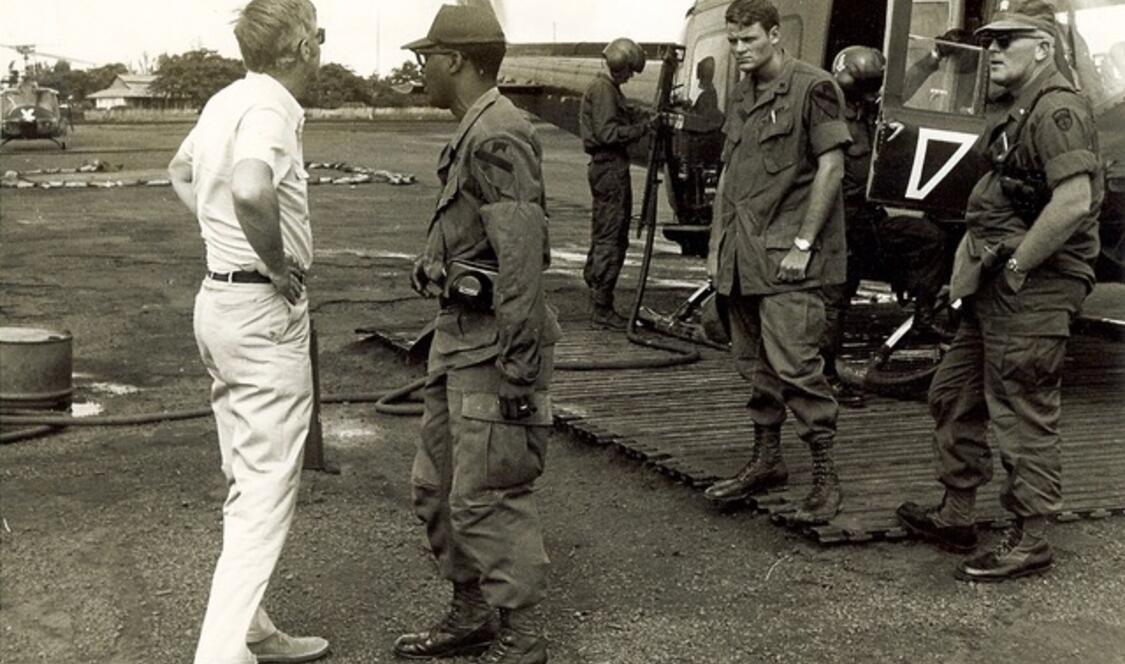
Soldiers on the flight to Vietnam were told nothing about their arrival. Was the plane going to be shot at on the way down? As they landed at Cam Ranh Bay, Craige looked out the window and saw men waterskiing. He thought, “This might not be so bad, after all.” That opinion changed shortly after his assignment to the 1stCavalry Division (Airmobile) in Bien Hoa. Introduction to the Division included a helicopter firepower exhibition for the newbies (aka FNGs – Fing New Guys). The pilot flying the helicopter gunship developed target fixation and failed to pull up in time, crashing right in front of everyone. Welcome to Vietnam!
Shortly after his assignment as the Division Postal Officer, a mail bag fell out of a helicopter and was lost in route to a firebase. Lost mail was a serious issue. Craige was told to fix the problem or be reassigned to an infantry unit in the field. Suddenly, the war got real. Step-by-step, from receipt of mail to delivery, he tracked the process and wrote an SOP (Standard Operation Procedure) which effectively secured the mail as well as his position at Division Headquarters.
Craige’s most gut-wrenching duty as Postal Officer was visiting three hospitals in Saigon, every weekend, for 6 months, to determine whether his division’s wounded soldiers were receiving forwarded mail within 5 days. Understanding the significance of receiving mail from home, the Division Commander visited the hospitals every Monday morning to check in with his soldiers. Craige knew he should stay ahead of the General when it came to mail delivery problems. He walked the wards, checked charts, and asked each of the 1st Cav’s wounded if they were receiving their mail. If not, he would find out why. Having to confront the physical horrors of wounded warriors on a weekly basis was traumatic and left Craige with indelible pictures and disturbing memories he recalls to this day.
On the lighter side, a nurse Craige got to know told him that General William Westmorland, Commanding General of all US forces in Vietnam, had recently visited the hospital to pin Purple Hearts on wounded soldiers. Halfway down one ward, as the General was pinning on medals, his aide, a Major, realized they were in the VD ward. The General was pinning Purple Hearts on solders who had contracted VD while on leave. The Major chose to say nothing to General Westmoreland, leaving the soldiers with amazing stories to tell.
The second half of Craige’s tour was spent as Special Services Officer in charge of Division morale. Movies, USO shows, and the Division Band were his primary tools. He noticed that 35mm movie reels, which were distributed throughout the Division, always came back shorter. He found that soldiers were cutting out sections of the films that had hot girls in them, splicing them together for “soft porn” movie nights that soldiers gladly paid to watch.
Information about upcoming USO shows was distributed to the field in advance, often with accompanying photos. Craige typically accompanied the performers and guests, including George Peppard, Ron Ely, professional tennis players, and assorted singers to the Division’s fire bases. His Captain got to escort the best VIPs: Miss America and her Court.
With discretion over the Division’s soldier band, Craige found he could “trade them” for favors. He negotiated a loan of the band to units at the Air Force Base through a Supply Officer friend, in exchange for enough volleyball equipment to organize a division-wide tournament. First, he needed permission from the Division Commander, which required a carefully written one-page proposal. Craige was later told the General thought his tightly-crafted proposal was the best to have ever come across his desk.
On December 14, 1970, Craige came home to complete culture shock. With short hair, he stood out like a sore thumb. His first call was to Joni. It turned out he had made it home on the same day her second child was born. Back in LA, Craige began working as a painter with his best friend. Scratching an itch, he used his VA benefits to join the Estelle Harman Actors Workshop, where he performed in a couple of plays, did some photo advertising work, and met girls. His big acting opportunity came in November 1975, when he heard about a “cattle call” audition for the pilot of a new TV show, the “Don Adams Hollywood Screen Test.” The call was for amateurs only and Craige ended up number 1,823 in line for a chance at a screen test. Finally given a script, he was asked to say, “I love you very much, my darling, please don’t leave me.” in three separate ways, then told, if he made the cut, they would call. Fate shone upon him, and he got a screen test playing opposite Connie Stevens, in the famous grapefruit-in-the-face scene from 1931’s “Public Enemy,” starring James Cagney.
Six months later, Craige’s life changed forever. His Mother called him, having had a layover on a flight through NYC: “Did he remember Joan Howell? She is getting divorced.” He had never forgotten her and was determined not to miss this second chance. Craige went to Connecticut, and the couple exchanged visits. He met her two children and reestablished the relationship. Craige and Joni were married 6 months later on New Year’s Eve, 1976.
Having a ready-made family to support brought new purpose to Craige’s life. He moved back East, did some painting, and photo advertising work, doing his best to make ends meet. At the end of the school year, with few opportunities, the family moved back to LA, where Craige knew he could get work painting full-time. They packed everything into a U-Haul and drove across country, returning first to LA, then moving to San Diego where Craige was given the opportunity to join his father’s business building 169 condominiums. Joni was able to transfer her new job with the McDonald’s Corporation from LA to their headquarters in San Diego. In 1979, Craige and Joni got their real estate licenses in anticipation of selling the newly constructed condominiums; but rising mortgage rates, coupled with no sales experience, ended that prospect. Craige was ‘let go.’ With his real estate license in hand and looking for training, Craige joined Forrest E. Olson (later Coldwell Banker) as a new real estate agent, at the age of 35.
During his career, Craige experienced many unusual sales challenges. In particular was “The Bird House,” where the owners had cut out a large swath of carpet in the living room and built a huge bird cage with predictable smells penetrating the concrete. They also had removed the windows into the master bathroom and built an attached outdoor cage, allowing their outdoor birds easy access. Craige faced these and many other obstacles, usually finding ways to overcome them.
Shortly after Craige changed offices, Joni quit her job with McDonald’s to support his growing real estate business. Not long after, Craige was asked by the franchise owner, Alice Hooker, to take over management of the office with the understanding that he and Joni came as a package. Together, they lifted the office’s energy and production, leading to their next phase of life.
In February 1987, Craige and Joni, along with two partners, opened their own office - Century21 All Star Realty. Craige’s reputation had earned him the respect of the real estate community and assisted him with recruiting efforts. In 1988, Century21 All Star Realty ended the year as #19 out of over 5,000 franchises, in sales volume. He taught his agents how to overcome their fears and farm. He found he was best at managing 45-50 people, drawing on the experience and confidence the military had given him.
By 1998, Joni was burning out. They sold their franchise and moved to Myrtle Beach, South Carolina where Craige’s father was being offered the opportunity to build a convention center hotel as part of a Public/Private enterprise. After a year, plans for the hotel fell through and the couple headed back to their home in San Diego. Craige was hired as COO of the company that had purchased his former Century21 office which, by then, had become the largest Century21 franchise in the United States, with 8 offices throughout San Diego County. He was responsibile for training, was the primary liaison to each of the individual offices and became the owners golf buddy.
In 2013 Joni started to have health issues, and the couple decided to formally retire. They had worked side-by-side for 31 years. In 2017, Joni passed unexpectedly, and Craige entered a period of deep depression. He didn’t go out of his front door for years and became somewhat of a recluse. Several of his CMC classmates urged him to come to his 50th reunion, and they have since formed a Zoom group meeting monthly to discuss books and catch up with each other’s lives. The group includes Stan Eubanks, Rodger Baird, Doug Campbell and Tom Ryan, all from 1968. Craige did not want to attend the reunion; but decided it was time to start saying “yes.” Saying “yes” became a life-changing experience.
One day, he watched a TV program that recommended walking on grass in your bare feet, watching birds and facing the Sun in the mornings and evenings. Soon, Craige began to take a renewed interest in his property and surroundings. The weeds were removed, bushes were cut back, and new plants were installed. He found himself outside talking with neighbors and re-engaging in life. Craige admits his depression sometimes still overwhelms him, but he has learned to cope, find new joy, establish new friendships, and enjoy life once again.
Here are Craige’s Life Lessons Learned:
- Do not lie. It’s a burden that eats at your self-respect.
- Be on time. Better to be an hour early than a minute late.
- Do not wait your life away. Choose something and go after it.
- Cherish your relationships. Little else matters.
- Be a Yes. You don’t get many second chances.