

Frank Petterson was in the Army Corps of Engineer in Vietnam from July 1969 to July 1970. With civilian advisory help, he was put in charge of a rock crusher and quarry complex with a mission to supply crushed rock for roads from the seaport to the highlands. It was a new complex at this location: The crusher system had to be erected, trouble shot, and christened, requiring close attention and maintenance. On one occasion, as dynamite charges were set off in the quarry, a rock was blasted about 3/8th mile down range where it pierced a mess hall roof, fortunately not at mealtime. It was an important lesson and one Frank never forgot: always pay close attention and monitor blasting techniques.
In the early 60’s, Frank’s father read a book on “How to Make a Million.” He sold his contracting company and bought a perlite ore processing plant. Heat expanded perlite particles are those little white pellets of glass “Rice Krispys” one sees mixed with potting soil and easily crushed between finger nails. Initially, perlite was used to extend the lightweight fireproof aggregate used with gypsum for plastered firewalls. Plastered walls were replaced using sheet rock. Casting about for another application, Frank’s father happened upon the fact that perlite was a great agent to mix with garden and potting soil. It kept soil moist and aerated. It was a boon to greenhouse grower operations and especially the pot growers in the northwest who discovered that perlite helped them grow fast, vibrant, and healthy plants. Business took off with customers ordering from Northern California, Oregon, Washington, Idaho, Canada, and even a few from Japan.
Frank entered CMC’s 3/2 program with Stanford in 1963. He anticipated taking over the family business one day and felt he should become familiar with “management engineering.” He was not a particularly brilliant student, but he was exceptionally good at establishing friendships with classmates who were. Frank’s ability to make friends and establish rapport became his “special sauce” and proved to be a success trait that kept him in good company at CMC, Stanford, in the Army, in marriage to Mindy, and in running the family business.
Frank played golf in his freshman year but was the last of the reserves where Henry Kravis ‘67 helped lead the team. He got a D in one of his subjects and his parents concluded, “no more golf.” He also joined ROTC in his freshman year as did many of his classmates. Vietnam was a vague second page story at the time. He said, “I wanted to do something for the country and felt an obligation to serve. I also believed it was better to serve as an officer.”
Frank was not sure his grades were good enough to matriculate to Stanford. He attended the ROTC Summer Camp at Ft. Lewis, Washington in the summer between his junior and senior years without knowing if he had been accepted. During a training exercise, he was approached by one of the Stanford ROTC officers who wanted to talk with him about the Stanford program. His immediate thought, “well, I guess I made it!”
Frank was commissioned in the Engineer Corps and after completing the second of two years at Stanford. He found himself at Ft. Belvoir, Virginia for Basic Engineering Officer training. It was a beautiful brisk Fall in Washington DC; he tried to experience the history, politics, and enjoy the ambiance of the area as much as possible. In the Fall of 1968, Frank was sent to Camp McCoy, Wisconsin affectionally called “Camp Swampy.” The camp trained ROTC Summer Camp Cadets, and Frank managed the aggressor platoon that participated in FTXs (field training exercises). After quite an idyllic summer camp experience, he received orders transferring him to Vietnam for the next year.
Just before heading to Vietnam, he read an article in “Time Magazine” featuring an article headlined: “Engineers Lay Down their Tools and Turn into Infantry to fight Viet Cong below Rocket Ridge.” The war suddenly became very real. He was assigned to the Battalion that “Time” was reporting on. The Battalion’s TOC (Tactical Operations Center) suffered a direct hit and most of the unit leadership was killed or wounded. With this in mind, on Frank’s very first night in his platoon, asleep in a bunk in the basecamp; his unit also received a mortar attack. One landed at the back end of his hooch, shredding the water tank. “My bunkmates knew exactly what to do. The officer in charge headed for the TOC. I (his replacement) stayed in my bed, levitating horizontally, not knowing what to do. That was the first and last time I stayed frozen during an incoming attack.” Frank notes that he had two objectives in Vietnam (1) do not get bitten by a snake and (2) do not shoot my weapon in anger.
Frank found himself assigned to the 15th Light Equipment Company with the 299th Engineer Battalion working near Quinyon, Bong Song and Ann Kye. His platoon’s first assignment was to build a 12-kilometer road that was perpendicular to QL-1 south of Bong Song in II Corps. He oversaw large earth-moving vehicles: Dump trucks, graders, backhoes, tractors with pans, and bulldozers. They had to raise and widen the surface of the trail 3-feet to 5-feet, compact it, and then spread and compact with asphalt mixed rock material. It was the end of the monsoon season, so the first task was to dry out and build up the road.
The other problems he had to contend with were mines; fortunately, they were locally made, and not too powerful for the heavy vehicles. As Frank’s unit traversed the road every morning, the locals would point out where the mines had been planted from the night before. They would frequently come acrost dead bodies. Frank had one bulldozer operator who was so skilled with the equipment that he could gently deliver the body unscathed to the side of the road where it was immediately picked up and taken away by mourners. Blowing freshly installed mines was no problem. His bulldozer was so heavy and protected that the mine would simply explode in place.
For the second half of his tour, Frank was responsible for running a rock crusher and quarry complex that crushed and sized gravel that was used on the roads. The quarry was called “Cobra Quarry” because one of his soldier’s pet mongoose had killed a cobra there. He had many interesting soldiers working for him. Most were stable, when closely monitored, like his driver, and all he had to do was to keep an eye on them. One was an artistic Eskimo who appreciated clouds and could use a knife with ease. His Battalion Commander was a very personable, guitar playing colonel whose next assignment was as the Commandant at West Point. He made his reputation by bringing the Battalion from the most shot up to the one with the best performance. The commander had three rules: “(1) Do the project; (2) Do the project right; (3) Do the project right and on time.
Frank worked with all types of people up and down the chain of command: some pleasant and some brutal. Frank also learned that these rock crushers were very temperamental, and parts would wear out quickly. It was critical to keep them well lubricated and monitored. When parts had to be replaced, Frank found it important to examine and replace the adjacent parts as these were most likely to fail next. He found that sending a case of steaks to the next crusher site up the mountain along with his new parts request speeded up the process tremendously. This too became a valuable lesson and one that helped him later in his civilian career.
When he returned from Vietnam after one year Frank notes, “It is hard for me to talk war with folks who have not experienced it. I was shown little respect after returning, but I was home, safe and sound and had done my duty.” He fulfilled his two original objectives and had not been bitten by a snake and had not shot his weapon in anger.
Returning to Portland, Frank took over the family business working with his father who was becoming progressively ill. After six months, Frank ran the show starting with 3 employees. He ran the business for nearly 50 years, from 1970 to 2018. He brought on his two sons-in-law and stayed with it until they were ready to assume control. The sons-in-law had new methods and diverse ways of doing things, and after six months Frank was able to formally retire.
The operation of heating glass pellets with entrained water to high temperatures is a complex and difficult process. It generates a “glass Rice Krispy” product. Frank, his wife and others from the company, made semiannual business trips all over the free world to learn new techniques. They established many close friendships and learned more about perlite from the locales they visited. His sons-in-law have subsequently sold the operation to one of the largest independent operators in the US, a similar family organization with more extensive and expanded operations. They are excited to see how the company’s employees meld with the new owners.
About 45 years after Mike Harrison ‘63 succumbed to Metastatic Melanoma; Frank came down with the same diagnosis in 2021. He was in his 70s and started to feel that life was letting him leave way too soon. He has been taking two gene therapy meds that stopped the growth of cancer. They are new, effective, and retail (both) for $31,000 per month, a retirement drainer. Fortunately, his VA pharmacy only charges $22 per month – a tremendous relief. Frank concludes: “My country thanked me for my service after all!”
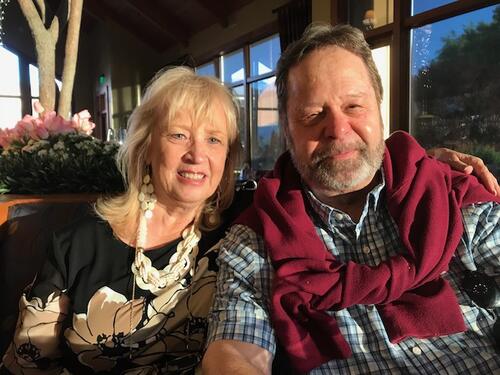
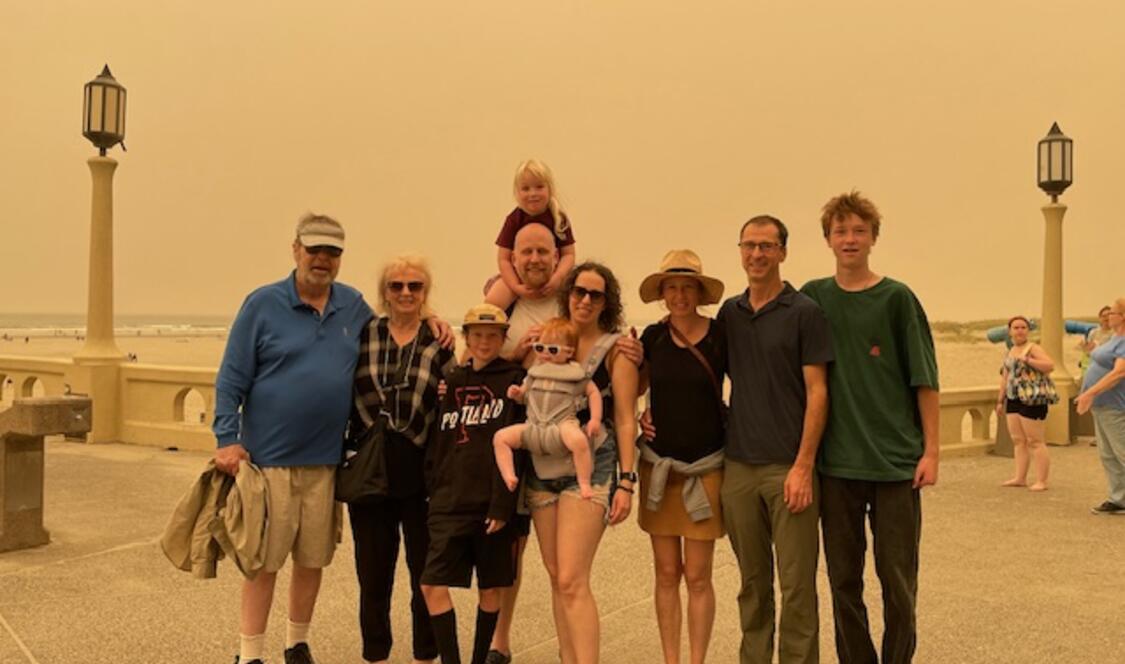
In conclusion, Frank says that he and Mindy are home bodies. They enjoy winters at their Palm Springs Condo, where they frequently entertain weather-soaked northwest friends. They will return to Portland in 2026 to begin residence in a new vibrant retirement community (one of the only residences in Oregon that is self-owned and operated). They also have a vacation home in Sun River where they go occasionally to get fresh air. The couple enjoys playing party bridge, and painting. Frank plans to return to the golf course soon. He also plans to play with the Patterson platoon of young family members, watching them grow up, live, and love life. Frank’s eclectic family includes an eldest daughter who has an English degree and operates a flower farm. His youngest daughter has a history degree and teaches Pilates.
Frank cites the following Life Lessons Learned that have impacted both his military and civilian careers:
- Establish close friendships with people who have skills you do not have. This personality trait has helped him throughout college, the military, and his perlite career and in social interactions.
- Give more than you take. When you give more, you will get back more.
- Make it a practice of looking people in the eye. This always makes for better communication.
- Speak the truth. Both soldiers and employees respond well to communications given in an honest way.
- Stay out of the jungle. You will not get bitten by a snake.