

Eric Herrick ‘63 enjoyed attending Claremont Men’s College. He was not sure what he wanted to do with his life and found the liberal arts curriculum stimulating and enjoyed his classes. He admits he could have had a much higher GPA, never failed a class, always did the reading, and was satisfied with a C grade. Upon graduation, Hal Painter, his English professor, called him “the last of the Gentlemen C Students.”
Punahou School is a well-known and historic private school in Hawaii, named for a Hawaiian word meaning “the new spring,” (Kãpunahou). It is a large, influential K-12 institution on Oahu known for educating socially minded leaders since 1841. It offers a comprehensive curriculum and a commitment to diversity and student well-being. It is not surprising then that so many Hawaiian students have come to CMC from this school. Eric Herrick ‘63 was one of them, starting in 1959. Eric debated several prestigious East Coast schools such as Yale, Dartmouth, and Haverford, where his father graduated, but Eric was a Hawaiian boy and knew that schools with snow and cold were not somewhere he wanted to be. He wanted a small school with a broad-based liberal arts program so Southern California warm and CMC would do simply fine.
Eric’s parents were both psychologists and Eric benefited from an eye-opening, half-year around-the-world cruise at 15 with his parents where he visited Vancouver, Panama, Europe, England, the Suez Canal, Sri Lanka, Ceylon, Indonesia, Malaya, Singapore, and Japan. He became an excellent bridge player and stood in when a 4th was needed aboard ship. He was a tall boy at 6’ 4” and had no difficulty holding his own playing with adults abord ship. He also participated in a few marathon games while attending CMC often conducted at the Hub and sometimes including Professor Hal Pointer, an avid bridge player.
Eric enjoyed the social atmosphere at CMC. He lived in Story House (before it burned down) and joined the Tortuga Social Club (later renamed Mara Toga). He participated in several playful stunts including one attempt to remove a freeway sign that included a club member’s name – prohibited by the California Highway Patrol, fortunately with no adverse consequences. He played Water Polo and La Crosse and took a few classes at Scripps, but his true love was participation in the CMC/Scripps drama program (Siddons) where he acted and took advantage of opportunities to socialize with Scrippsies.
Eric admits that while he was serious about reading all the required material assigned in his classes, he was not so serious about achieving a high GPA. He was satisfied with his C+/B- average that gave him free time to devote to other pastimes. ROTC was a 2-year course required at CMC in those days with the 3rd and 4th years elective leading to a commission. Eric enjoyed the structure and formality of the program. The Vietnam War was starting to heat up and he decided he would prefer to be an officer in charge of “something.” In his senior year, he was one of the top cadets along with his friend Bill Crouch ‘63 who was the Battalion Commander and went on to become a three-star general. Eric chose to be the Sergeant Major of the Battalion because, “that position did not require I carry a sword - something I found pretentious.”
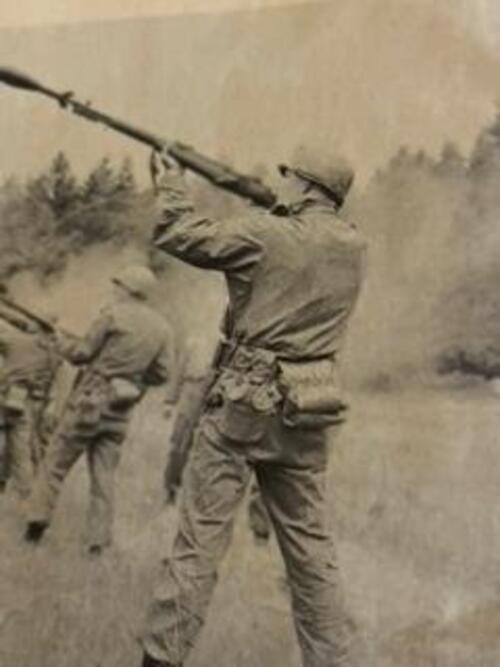
Upon graduation in 1963, when it came time to choose his branch, Eric thought about the Transportation Corps because he wanted to be a Tugboat Captain, but discovered those positions were all reserved for Warrant Officers. So, he chose Army Military Intelligence (AMI). This was an attractive branch because at the time all the officers in the branch were Reserve Officers, a legacy from WWII OSS days when “only gentlemen went to war.”
All MI officers had to first undergo the rigorous Infantry Officer Basic Course at Ft. Benning, Georgia. Eric developed strong friendships with ROTC graduates from other colleges and universities across the U. S. Upon conclusion from the course, a group decided to celebrate at a famous restaurant outside the post called “The Black Angus.” One of the officers in the group was Black and the group was refused service because they had a “whites only” policy. Rather than make a scene the group loaded into a car, drove to Atlanta, and concluded their graduation celebration. This was Eric’s first encounter with Southern Racism and the event stuck with him.
From Ft. Benning, it was off to Ft. Holabird, Maryland in 1964 for the 20-week Military Intelligence training program. Part of the training was an out-of-town capstone FTX (Field Training Exercise) to participate in semi-realistic counter-intelligence training. Eric flew to “Poland” (i.e., Denver) where he was to be trailed by four active-duty special agents who played counter spy parts. These officers provided a four-person trailing team and interrogators (i.e., “the enemy”). They were assigned to intercept, hold, and question him. Eric spotted the tail and was able to avoid capture by entering a bar, but suddenly finding his way blocked he turned around and confronted his would-be captors. He instantly recognized a classmate. Earl (Gene) Bevins ‘61. He yelled out his name, and this ended the exercise - effectively taking the whole group “off problem.” Everyone sat down, had a beer, and swapped war stories.
Immediately after the Kennedy assassination, Eric was on casual duty waiting for his class at Ft. Holabird. He was ordered into jacket and tie and to report to a garage with a “go bag.” He partnered with another officer. They drew sidearms, had their IDs checked, issued a sedan, and were given orders in a sealed envelope. The pair sat in the vehicle for a while then were instructed to turn in the weapons and stand down. Eric suspects the team was scheduled to provide VIP protection and escort duty once President Johnson had been sworn in and had returned to D.C. but were not needed.
Following training, Eric was presented with four options for his next assignment:
- Combat Intelligence (S2) - no combat, thank you.
- A 27-week course on interpretation of aerial photos course – Boring!
- H Course “Secret” - counterintelligence – No spook work, thank you.
- C Course “Secret” - training spies and becoming handlers – Humm, why not?
Eric got slotted into the C Course: Foreign Area Intelligence Officer, MOS 9668 – an MOS (Military Occupational Specialty) that no longer exists --- like tail gunners in airplanes. Upon completing the course, with just a bit over year left on his 2-year contract, Eric was posted to the 502nd MI BN in Korea.
Eric’s time in Korea was a light cover assignment. He was documented as a civilian employee of the Army. He still is uncomfortable discussing his secret responsibilities in detail but was able to say that his work included identifying and training people to become spies and go across the border into North Korea. He was also involved in several wiretapping incidents, gathering and reporting information back up the chain of command. His superiors discovered that Eric was good at accounting and math skills and was tapped to perform covert accounting activities. He prepared reports documenting how his unit’s contingency funds, allocated for clandestine operations, were spent. Eric enjoyed this work because “he didn’t have to kill anybody.”
Eric was exceptionally good at his job and applied the knowledge from Professor George Gibbs’ accounting classes at CMC. When presented with a challenging problem, he often thought to himself: “What Would Gibbs do in this situation?” Only once was one of his vouchers kicked back asking for an explanation about the purchase of ice to make iced tea. The query came back: “Why didn’t you go to the Quarter Master to obtain ice for free rather than buy it?” Eric patiently explained that the nearest Quarter Master was over 100 miles away and to obtain ice would have required him to obtain a 10 lb. block of ice which would have melted by the time they returned to make the iced tea. Eric received no further objections to his vouchers.
Throughout his time in Korea, Eric usually wore civilian clothes and was documented by the Army as a civilian. It was easier to wear a uniform for stuff like briefing military staff. His security clearances were exhaustive. This meant (1) he could bump folks off military planes as a courier, and (2) get amendments to his orders permitting armed travel. The work meant long hours though not strenuous. Eric enjoyed time off for local sightseeing and skeet shooting. During this time satellites and more sophisticated ways of electronic eavesdropping started to be adopted. There was no longer the same need to train spies and the risk having them captured.
Completing his active-duty assignment, Eric returned to Hawaii in 1968 and accepted a sales position with Union Oil. Then, a year later he worked for Dun and Bradstreet as a Commercial Collection Manager. In 1969, he went to work for Swets Zeitlinger, an academic and technical publisher based in Holland. The company sold research literature to academic libraries, published serials and monographs, developed new business enterprises selling reprints and psychology tests. Eventually the company became one of the largest subscription agencies in the world and sold medical texts and journal reprints representing hundreds of titles. Curiously though - Swets’ antiquarian material was the most fun - incunabula texts were fun grouping into catalog offerings. These were books printed using metal type up to the year 1500.
Eventually Eric was invited to open a West Coast office in the U.S. and found himself responsible for sales west of the Mississippi. He enjoyed meeting and doing deals with CEOs of technical publishers. With the advent of more technical distribution of material (CD ROMS and Online distribution) the company gradually declined, and Eric decided to take advantage of the GI Bill. He attended grad school at Santa Clara University in 1974 and earned his MBA. He stayed on at Santa Clara teaching Business Law in the MBA program for a few terms.
In the late 1970s he split his time between Economic Development opportunities and adjunct teaching at the University of San Francisco, University of Redlands, Monterey Institute of International Studies, and some other schools in the San Francisco Bay Area. He also began consulting and advising companies and individuals who were submitting bids for major contracts. The work was varied, and wide ranging, and Eric found the diversity of work appealing.
In the late 1990s, he was the Economic Development Director for Siskiyou County, CA. His work was to evaluate the impact of closing so many sawmills in the Northwest. In this position he took trips visiting the many rivers in Northern California, Oregon, and Washington including the Salmon, tributaries of the American River, Smith River, and the Klamath. He participated in a variety of river rafting excursions and pack trips, seeing and visiting the beautiful natural surroundings. On one occasion, he was practicing casts with a hookless line on the bank of the Klamath River and was approached by a game warden who wanted to see his fishing license. “I’m not fishing,” exclaimed Eric. He reeled in his line to show there was only a sinker at the end. The warden asked for an explanation and Eric pointed to several turtles emerging from the water and an egret swooping down to grab a fish and said: “I’m here for the beauty of nature.” The Warden responded, “Me too.”

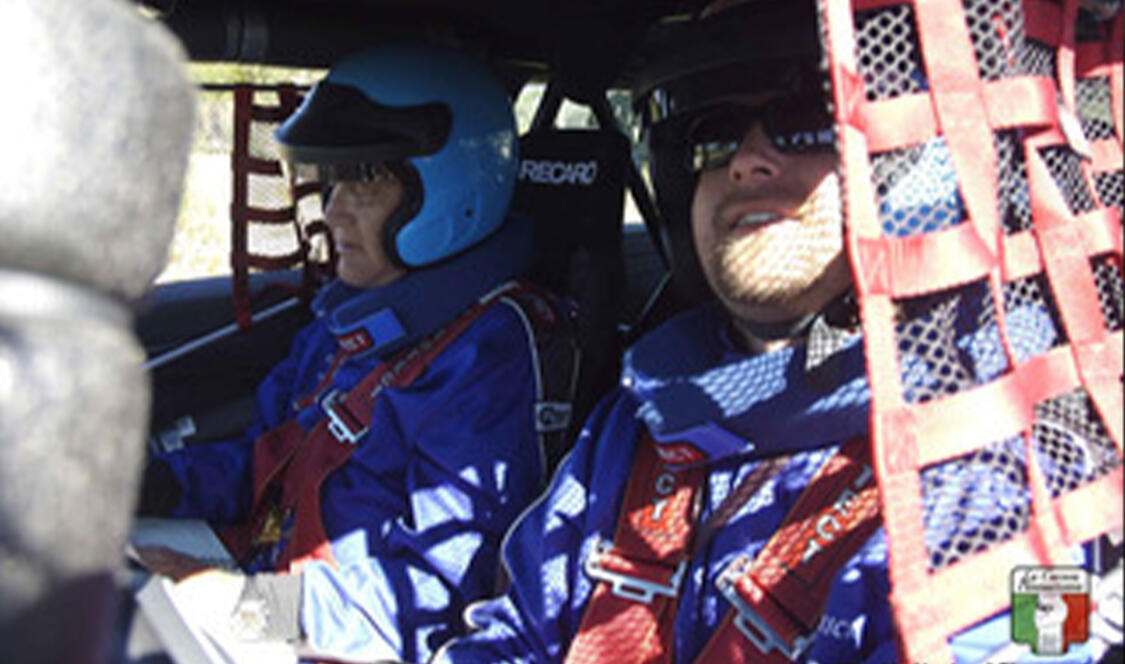
In 2000, Eric moved back to Santa Cruz and worked part time teaching Finance and Economics at a variety of universities including Redlands, San Francisco, Phoenix, De Anza, and community colleges in the Bay Area. Today he spends his free time with his son Colin attending and participating in amateur car racing on tracks, Cross-Country Rally Runs and even participating in the La Carrera Panamericana - a multi-day road race in Mexico.
Here is Eric’s Life Lessons Learned List:
1. Get to know and work with people not for people.
2. If a job is worth doing get someone else to do it.
3. After #2, do the task no one else wants to do.
4. Never underestimate the power of your Senior Thesis. (He found his land tenure research extremely helpful as the Chairman of the Assessment Appeals Board for the County of Santa Cruz. Mid 1970’s to date with 4 years in the 1990’s)